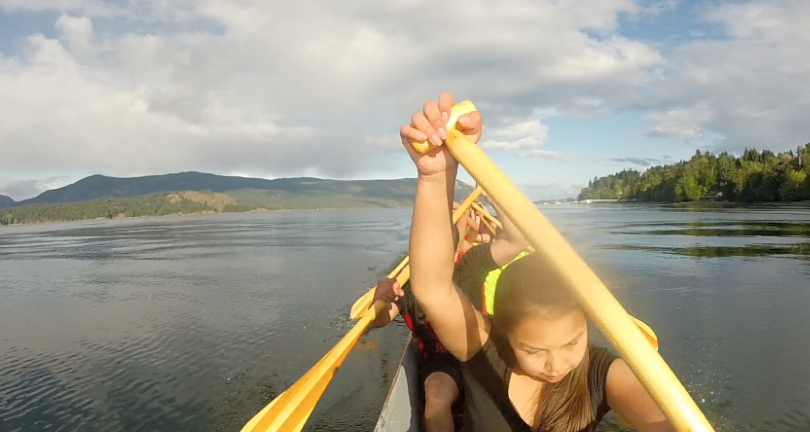
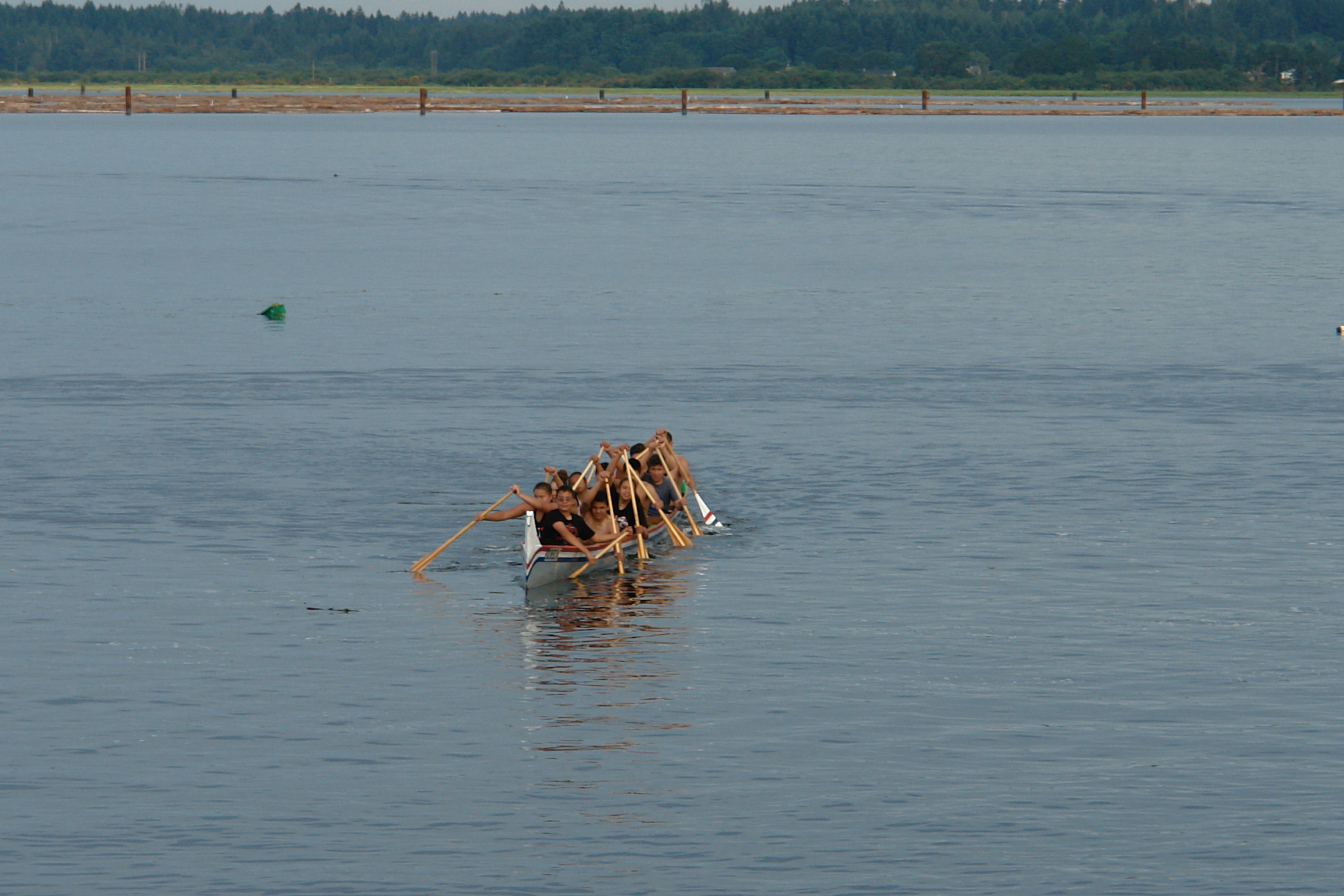
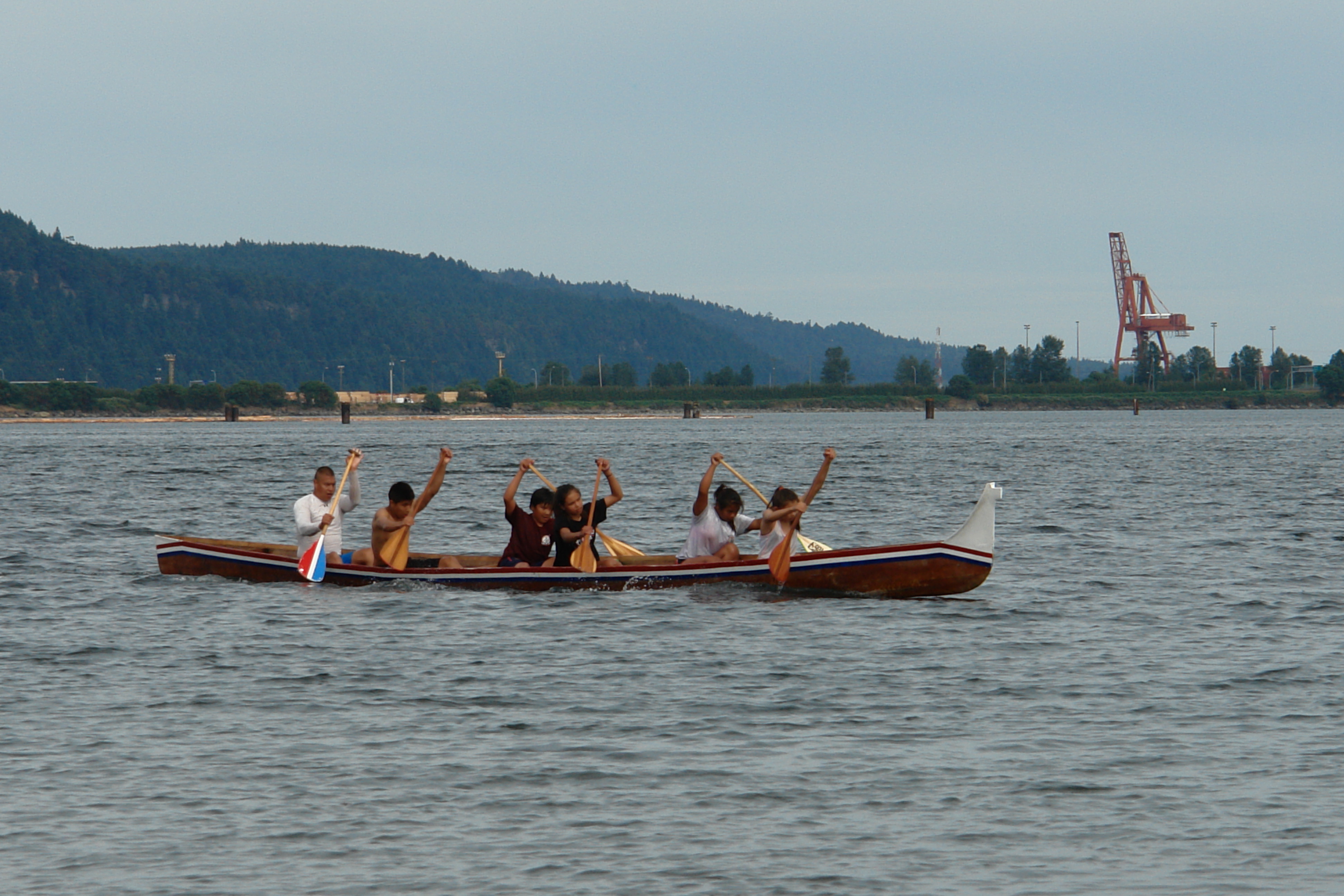
’ula’ulh ’utl’ Flaming Star On board the Flaming Star
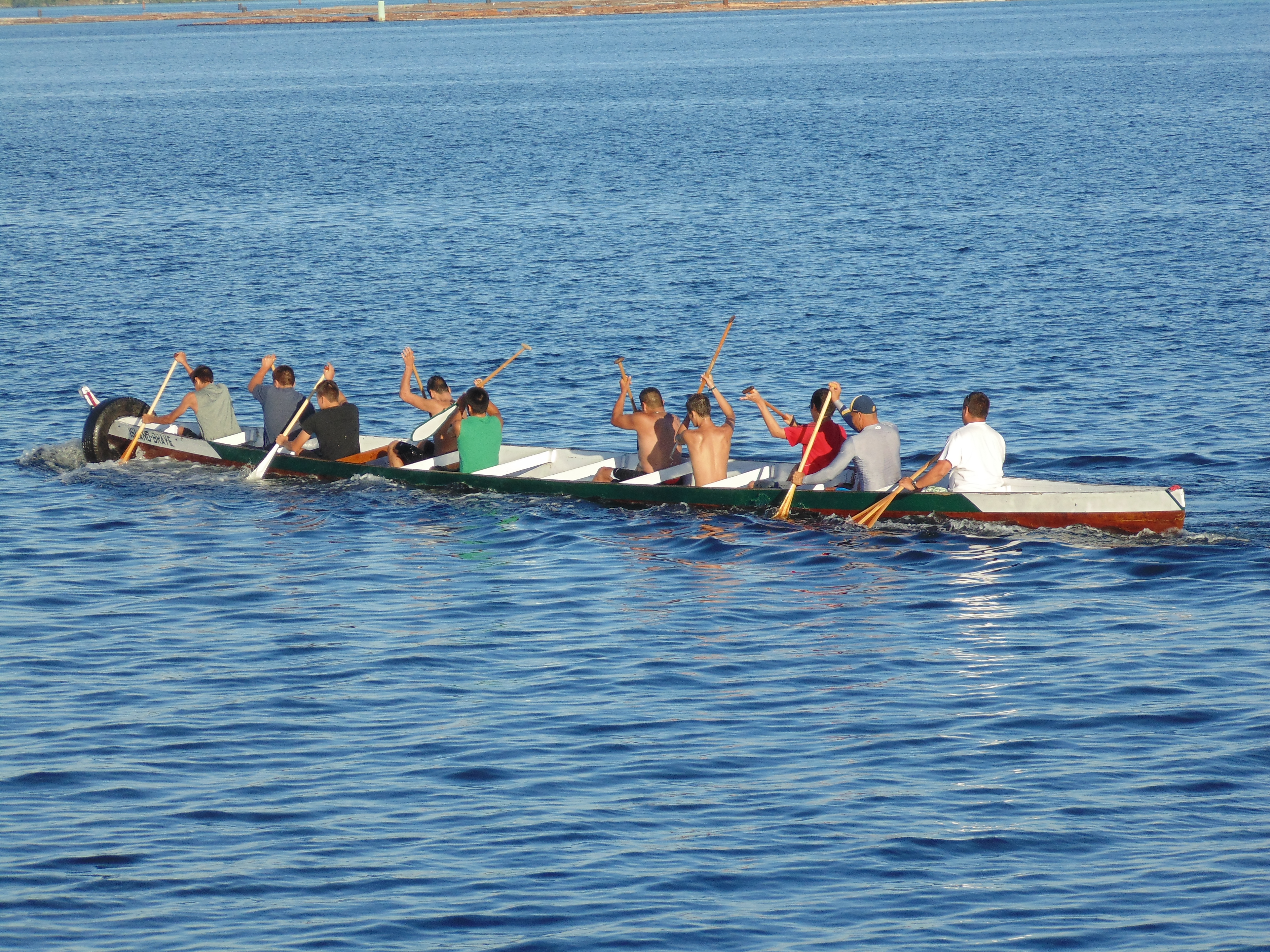
Come along for a ride as the paddlers in the Flaming Star Canoe Club go for their evening practice. Flaming Star, 11-man canoe, paddlers are:
Janelle Paige, Shane Sylvester, Brandan Price, Dallas Paige, Nikita Cenname, Kyla Price, Jodi Paige, Sophia Elliott, Victor Washington, Hilda Paige, Kevin Paige. Little Rich, 6-man canoe, paddlers are:
Carleen August, Shane Sylvester, Marika Tommy, Leslie Paige, Hilda Paige, Kevin Paige.
Canoe owners and videography by Kevin Paige and Wayne Paige, Jr.
Thanks to Shannon Joe for video editing.
ni’ tst yu xi’xlhe’mut tthu ni’ yu ’i’shul’. We are watching the ones paddling.
ni’ thextus kwthu tsitsulh tselush. They are pushing with their top hand.
hay tthu tl’itl’up ni’ hwkw’atus. And on the bottom they are pulling.
ni’ sul’ts’us kwus hwu’alum’ qul’et ’ushul. They circle to the front to paddle again.
tskw’ush ’i’ kw’ xu’athun kws yu ’i’shul’s ’eelhtun. They do 24 strokes.
yu ha’kwushus kwthu tsitsulh smustimuhws. They use their upper bodies.
Wayne Charlie — Pulxwuletse’ Kwa’mutsun, Quw’utsun’
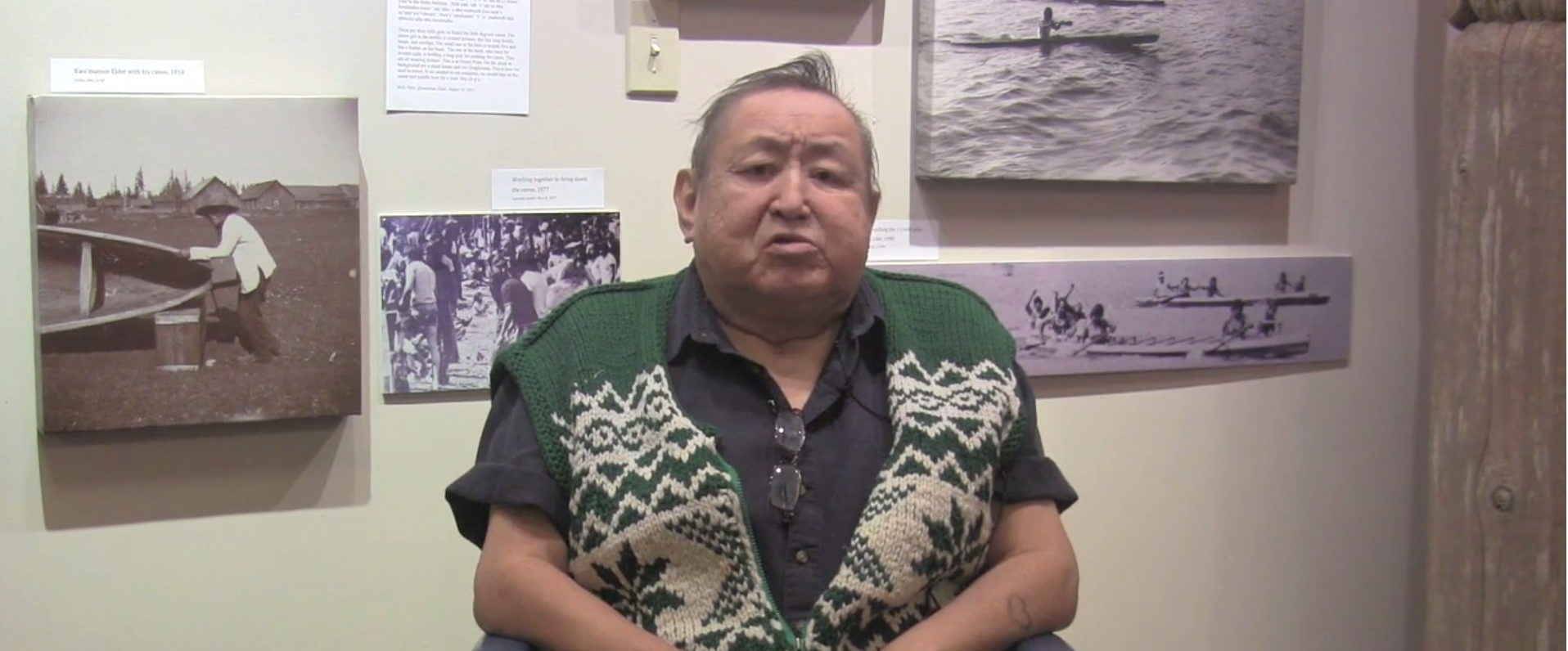
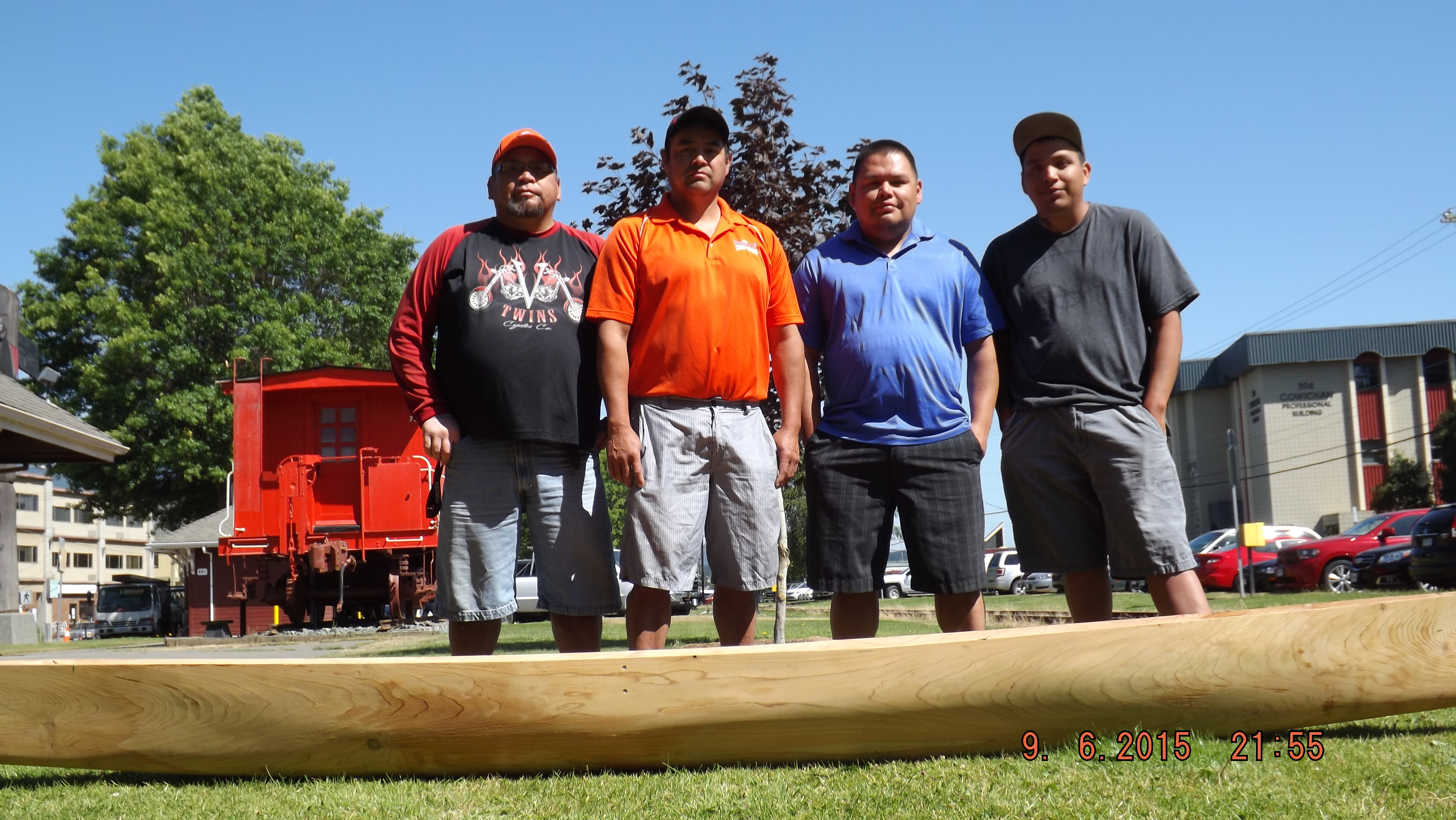
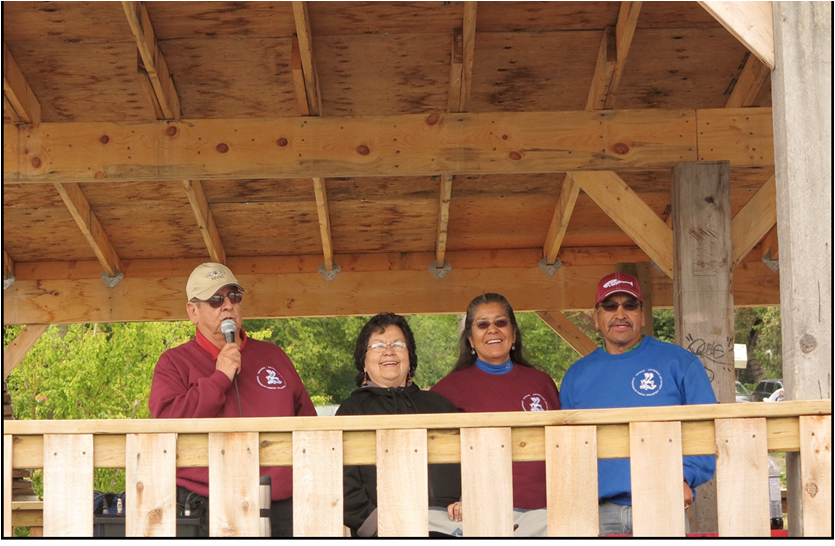
Willie Seymour gives a short welcome in the Hul’q’umi’num’ language to the youth who are visiting the Cowichan Valley Museum exhibit hwsteli hwulmuhw Coast Salish canoe pullers. Duncan, British Columbia. June 24, 2015
’aa sii’em’ nu ts’lhmustimuhw, sii’em’ nu smun’eem,
Oh, my respected fellow-people, respected young people,
hay tseep q’u kwus ’i m’i tetsululup ’u tun’a kweyul, hwu’inamut.
thank you all for coming today, for managing to get here.
ts’elhum’ut tseep tse’ tthu sxwi’em’s tthu t’at mustimuhw.
You are going to hear the stories of the Elders of the past.
tthu sht’esulh kws ’i’shul’s ’u tthu sunihwulh,
how our people used to paddle on the canoe.
nilhulh snuhwulhs tthu t’at mustimuhw.
That was the vehicle in the olden days.
’uwu te’ shelhs.
There were no roads.
tun’a kweyul ’i’ nilh tthu snuhwulh ha’kwushut, s-hwunitum’a’lh.
Today, we use the white man’s vehicle.
The following is a welcome message to those visiting the “tthu hwsteli hwulmuhw | Coast Salish Canoe Pullers” installation at the Cowichan Valley Museum in Duncan, BC. View this page to find out more about the exhibit.
Welcome on board our canoe! Our project is designed for people who would like to improve their Hul’q’umi’num’ language skills while learning about the language as it goes along with canoe culture. Whether you are a coach, a canoe puller, a fan, or even a complete stranger to our Coast Salish territory, we hope you will find something here that will interest and inform you. Please enter with respect and appreciation for the knowledge of our Elders that is shared here. We look forward to taking this journey with you!
We are island nations, salt water people. Our villages from the beginning of time have been strategically located along the seashore, allowing us to enjoy the gifts of the Salish Sea. Our intimate relationship with the water could not have been realized without the help of the sacred canoe.
Canoes were very important to people of times past.
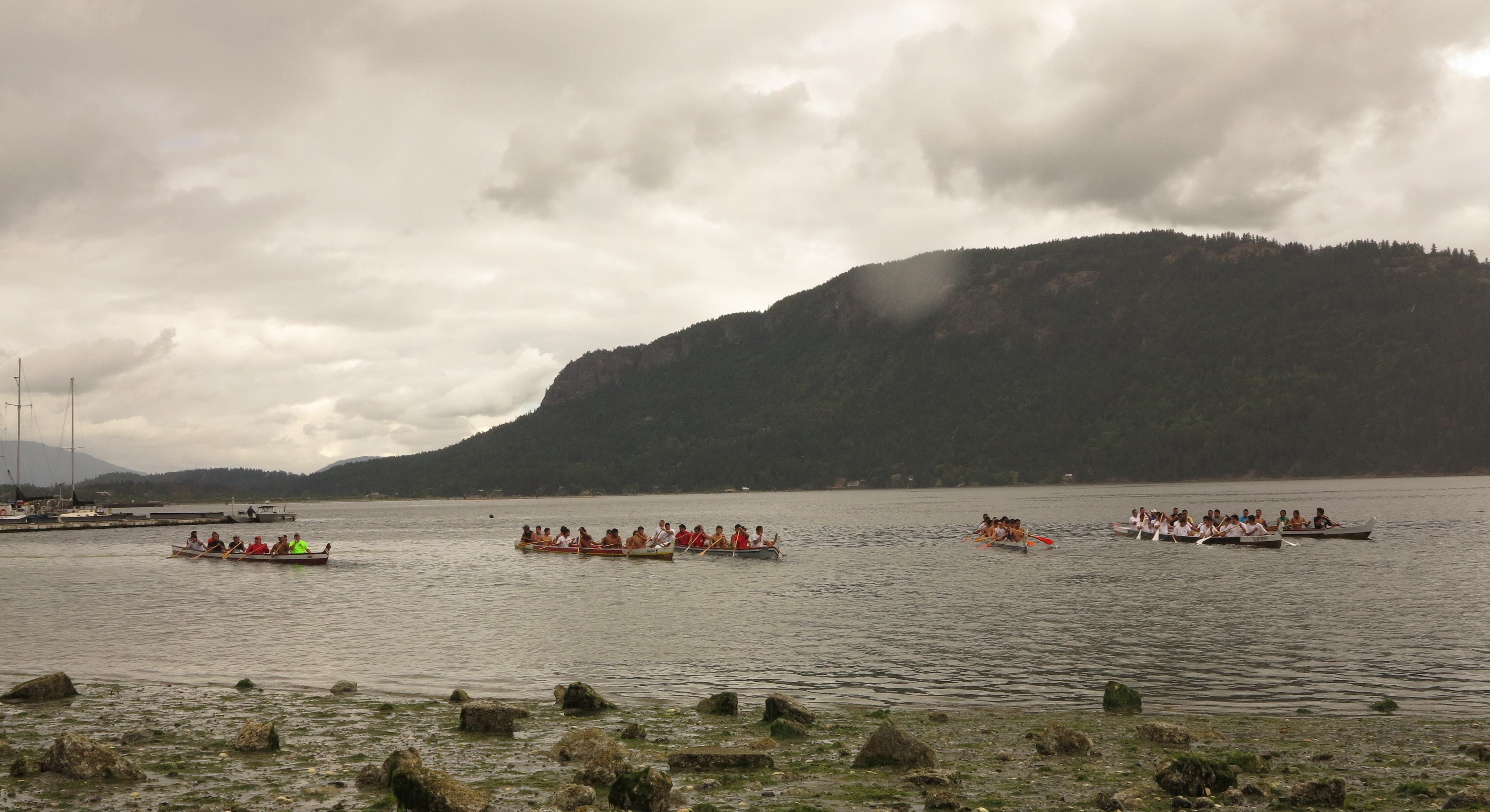
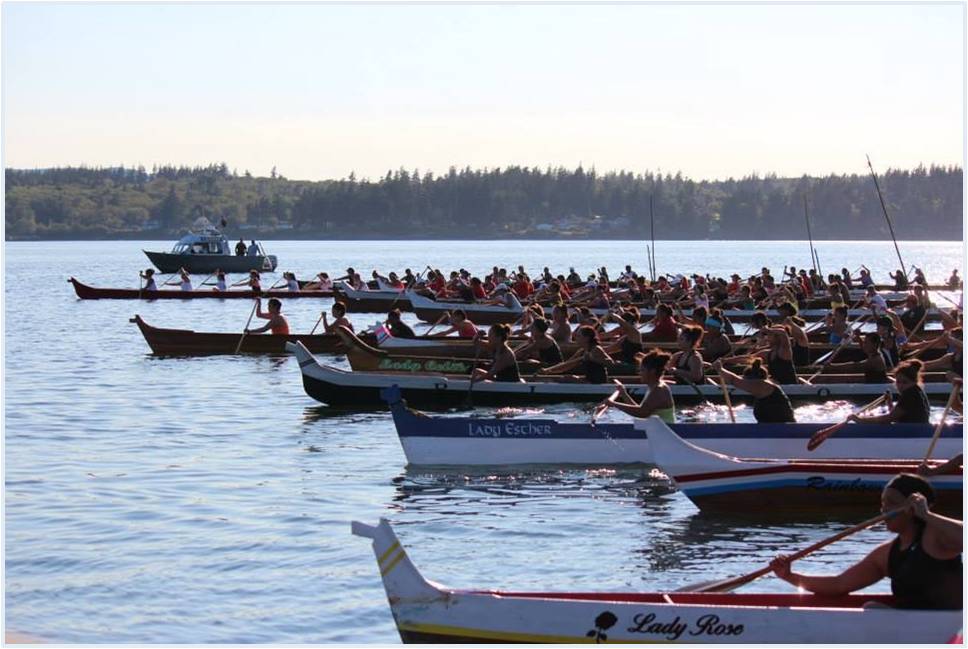
We Coast Salish People have always gathered to celebrate our culture. In the winter, we gather in our longhouses, and in the summer, we gather at the canoe races. Training for these races is an authentic learning experience that emphasizes respect, humility, and interdependence. Throughout the summer months, the canoe connects our communities from the youngest to the oldest and anchors us in our language and culture.
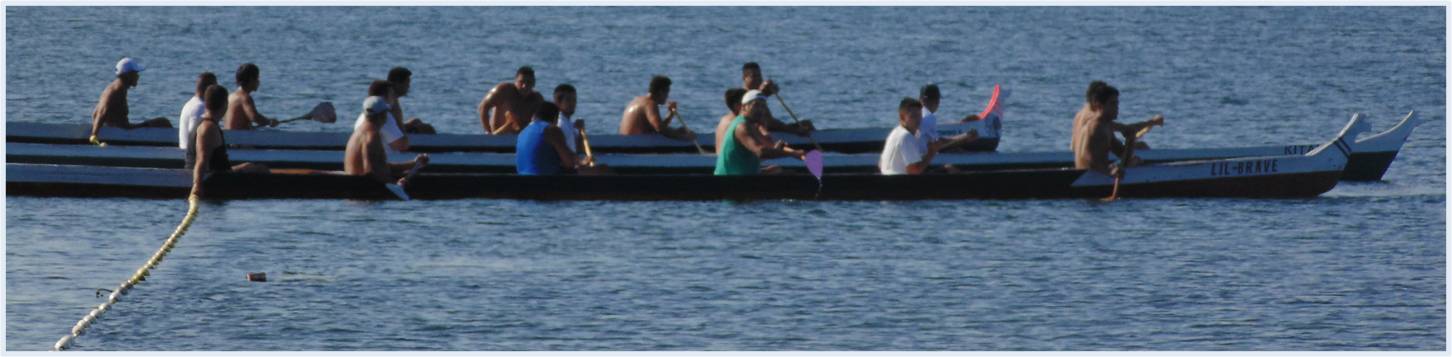
The paddlers travel each week to different locations for the canoe races.
The Hul’q’umi’num’ language is very different from English, and so it might be challenging to get going in it, especially at first. But, just as it is with canoe pulling, practicing every day builds a strong mind. Learning our language requires motivation, endurance, perseverance, and much effort. But once you have mastered the basics, then the language starts to unfold and a door opens to the world of the Coast Salish way of being.
tthu hay ’ul’ ’eli’ hws’ush’ushul ’i’ nilhhay ’ul’ ’eli’
kw’am’kw’um’ shqwaluwuns.
Good paddlers always have good, strong thoughts.
This canoe was put in the water by our dedicated team of language speakers, teachers, and researchers, young and old.
All the ones that become canoe pullers can’t complain when theyfirst join the team and they are told that they have to become strong-minded and physically strong.
They are given the teachings about different kinds of canoes and paddles. They are told about the teachings of the cedar tree. The leader would say that those of you that that are on the canoe are the ones that are bringing the canoe to life, waking it up. It is your decision to make your canoe become strong. Many teachings are given to the young people.
Aah, my friends and relatives, those of you that are teaching the new canoe pullers the cultural traditions, you are giving them the most sacred feelings, teaching how to be in canoe pulling. Thank you.
sht’es kws t’ut’athut tst, ’uwu kws hwq’uywulh-s ’uwu te’ hun’utus, tl’lim’ ’uw’ q’awuthut.
This is how we trained—no one would ever complain or get tired, and we used all our strength.
thimat p’e’ kw’us teti’ mustimuhw, ’uwu ’uw’ tl’uhwla’usus ’ul’ .
The paddlers were important, as it’s not just a pastime.
’uwu ch ’uw’ sht’eewun’uhw ’ul’, “a-a-a kweyul tse’ kwunus nem’ t’a’thut.”
You can’t just think, “Ah, I’ll practice tomorrow.”
skw’e-e-ey kw’us tuw’ s’um’mut.
You mustn’t be lazy.
ha’ tse’ s-hwu’iw’s tthun’ mustimuhw suw’ s-hwu’iw’s tthun’ snuhwulh.
If your body is very alert, your canoe will also be alert.
st’e ’uw’ niihw ’amust ’u tthun’ swe’ ’un’ s-huli.
It’s just like you give it your soul.
ha’ kwu’elh hulithat tthun’ snuwhulh ’i’ tl’lim’ ’uw’ ts’unum.
So when your canoe comes to life, it will really shake.
’i ch ’ula’ulh kwun’et tthun’ sq’umul’ st’e-e ’u tu’inulh ni-i-i st’ulut’in’—
When you’re on the canoe holding your paddle, lined up like this—
’i’ wulh ts’unum tthun’ snuhwulh st’e ’uw’ niis wulh ’al’mutsun’, ni’ wulh hulithut.
and your canoe is shaking, just like it’s waiting, and it comes alive.
Willie Seymour — Sxweltun
Stz’uminus
’u kwus wulh hwun’ yui’shul’, kwthu ni’ ni’ ’u kwthu q’lhan. ni’ tse’ ni’ ’u tthu sya’lum’iws, ’uw’ niis tse’ wulh tus ’u kwthu shni’s kws ts’ulquns ’eelhtuns.
When they are paddling, the one in front needs to be on the right when they are making the turn.
’i’ ni’ tse’ wetth’utus kwthu snuhwulh ’uw’ niis wulh ts’ulquns ’eelhtun.
And they will pry the canoe in order to turn it around.
’i’ hay kwthu ni’ yulhi’a’uqwt ’uw’ yu’i’shul’ ’eelhtun.
The ones behind are just paddling.
Sometimes when they are paddling, someone will go “Hup! Hoo!
This aids the canoe to get going fast, helping all those who are paddling to come together all of one mind strengthening the pressure.
Sometimes they are trying to beat the canoe ahead of them.
Wayne Charlie — Pulxwuletse’
Kwa’mutsun, Quw’utsun’