Author: Donna Gerdts

  • hwsteli hwulmuhw – Cowichan Valley Museum: ’ula’ulh ’utl’ Flaming Star – On board the Flaming Star

    hwsteli hwulmuhw – Cowichan Valley Museum: ’ula’ulh ’utl’ Flaming Star – On board the Flaming Star

    ’ula’ulh ’utl’ Flaming Star
    On board the Flaming Star

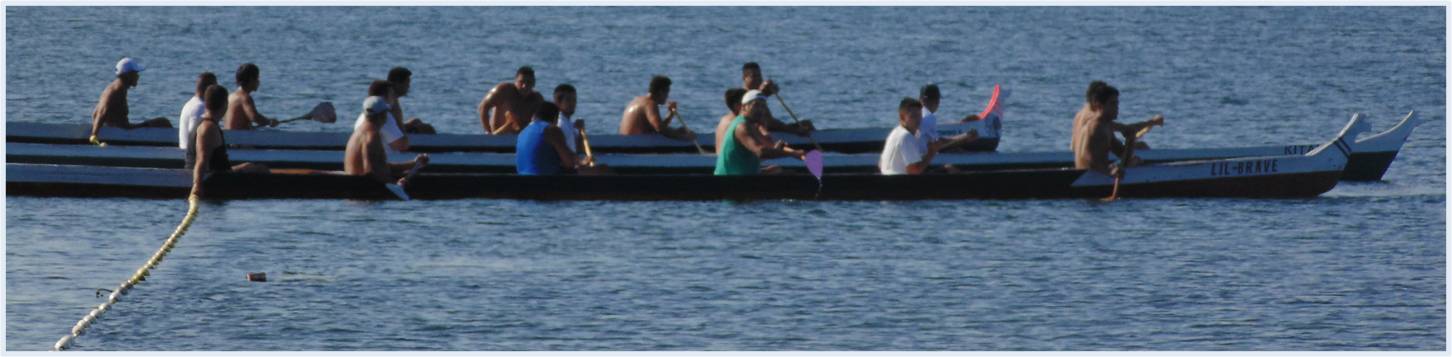
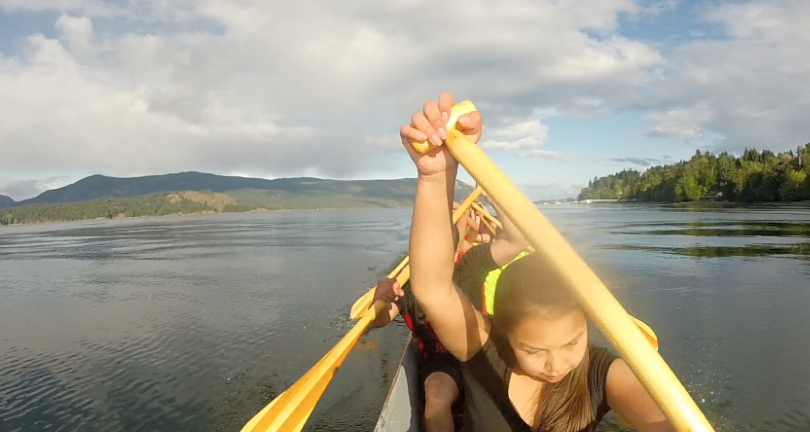
    Come along for a ride as the paddlers in the Flaming Star Canoe Club go for their evening practice.
    Flaming Star, 11-man canoe, paddlers are:
    Janelle Paige, Shane Sylvester, Brandan Price, Dallas Paige, Nikita Cenname, Kyla Price,     Jodi Paige, Sophia Elliott, Victor Washington, Hilda Paige, Kevin Paige.
    Little Rich, 6-man canoe, paddlers are:
    Carleen August, Shane Sylvester, Marika Tommy, Leslie Paige, Hilda Paige, Kevin Paige.
    Canoe owners and videography by Kevin Paige and Wayne Paige, Jr.
    Thanks to Shannon Joe for video editing.


    ni’ tst yu xi’xlhe’mut tthu ni’ yu ’i’shul’.
    We are watching the ones paddling.

    ni’ thextus kwthu tsitsulh tselush.
    They are pushing with their top hand.

    hay tthu tl’itl’up ni’ hwkw’atus.
    And on the bottom they are pulling.

    ni’ sul’ts’us kwus hwu’alum’ qul’et ’ushul.
    They circle to the front to paddle again.

    tskw’ush ’i’ kw’ xu’athun kws yu ’i’shul’s ’eelhtun.
    They do 24 strokes.

    yu ha’kwushus kwthu tsitsulh smustimuhws.
    They use their upper bodies.

    Wayne Charlie — Pulxwuletse’ Kwa’mutsun, Quw’utsun’
  • nem’ ’utl’ tl’palus tu Sam | Sam goes to Cowichan Bay

    nem’ ’utl’ tl’palus tu Sam | Sam goes to Cowichan Bay


    nem’ ’utl’ tl’palus tu Sam | Sam goes to Cowichan Bay

    ’een’thu p’e’ Sulihul’tun, Samuel Jones, tun’ni’ tsun ’utl’ Snuneymuhw.
    Hello my name is Samuel Jones (sulilhultun) and I am from Snuneymuxw.

    tun’a kweyul ’i’ nem tst ’u kwthu stey ni’ ’utl’ tl’palus.
    Today we are going to Cowichan bay races.

    nilh tumuhws tu Quw’utsun’ mustuyuhw.
    This is the land of the Cowichan people.

    sus ’uw’ tl’eshutus kwthuw’ mukw’ tun’unutsu kws nem’s ’uwatul’ tey.
    They have invited people from everywhere for the canoes races.

    ’uy’stuhw tsun kwunus hunum’ ’u tu stey, nan ’uw’ qux ’un’ sul’uthut ’i’ ni’ tsun tl’e’ ’uw’ lumnuhw tthunu siiye’yu.
    I love going to the races. There is so much to do t and I also get to see my relatives.

    ’aaah! na’ut shni’s tu ts’lhhwulmuhw tst kwus q’uq’ulum. ’i tst tse’ ’uw’ hwu sq’uq’ip ’u tu hwsteli.
    Oh look! There is our family is camping. We are all here together with the canoe pullers.

    yath ’uw’ xut’uste’lum’ ’u tu shhwum’nikw, “yath ch ’uw’ ’i ’ul’ ’u tu shhw’i tst kws q’uq’ulum’ tst skw’ey kwun’s nem’ tuyti’qul’ ne’nuts’uw’t-hwum.”
    My uncle always tells me, “You have to stay in camp area and can’t wander around to other camps.”

    ni’ tsun kwu’elh [’uw’] stutes ’ul’ kwunus hiiw’a’lum’tul’ ’u kwthunu s’a’luqw’a, ni’ ’u kwthu tuw’ hwthuthiqut.”
    So I stay close by, playing with my cousins in the bushes.

    nii! lemut tu sunihwulh yul’a’ulh ’u tu tluk.
    Hey, look at those canoes on top of the trucks.

    nilh swe’s kwthunu shhwum’nikw, Paul, tu snuhwulh.
    That’s my uncle Paul’s canoe.

    ’i’ hay tu nets’uhwulh swe’s kwthu na’nuts’a’ nu shhwum’nikw Mike. hunutum’ tu snuhwulh ’ukw’ “Lil Brave.”
    And there’s Uncle Mike’s canoe, called Li’l Brave.

    may! lemut lhu tu sunihwulh! ’e’ut ’i ’u tun’a kweyul, tl’lim’ nan ’uw’ qux. Wow, look at all canoes here today. There are lots.

    mukw’ tun’unutsu tu ’i m’i tetutsul’ ’u tun’a kweyul.
    People from all over have come here today.

    ni’ lhihw skweyul tun’a ’i’watul ’i’ hay ’ul’ qux kwsus nuts’tul tu s’uwatul’.
    The races last for three whole days and there are all kinds of races.

    ni’ ’u kwthu hwun’a skweyul ni’ ’u kwthu slhq’etsusth ’i’ nilh kwthu stl’ul’iqulh xut’ustum’ “munchies”.
    On the first day, Friday, are the “munchies”.

    yelhs tusth ’u kwthu hwun’un’uts’a’ ’i’ kwthu hwyusyey’sul’u.
    First come singles and then the doubles.

    hay ’i’ hwi nilh kwthu yu t’uxum suw’wuyqe’ ’i’ kwthu yu t’uxum’ slhunlheni’.
    And then next ae the men’s six-man canoes and then the ladies’ six.

    lemut! ’i’lhu nem’ ’u tu tsuwmun qux ts’twa’ lumnuhwut ni’ ’u tu tsetsuw’.
    Oh look! Let’s go down to the shore, where there are lots of good things for us to look at down on the beach.

    ’uy’stuhw tsun kwunus le’lum’ut tu pqwutsun ’i’ tu q’uy’mun, ’i’ tu smeent ’i’ tu qux ’uli’ey’x.
    I like looking at the sand, shells, rocks, and little crabs.

    ’aaah na’ut wulh huye’ tthu ’apun ’i’ kw’ na’nuts’a’ munchis sunihwulh. tl’hwu’nuqs lhu ’ul’ lhunu sqe’uq.
    Oh look! There goes the 11-man munchies. I sure hope sister wins!

    “yeey,” thut tu shqwiiqwel’, “tl’hwunuq thu Warpath.”
    “Yay!” says the announcer. “Warpath wins!”

    hwi’ nilh kwu’elh kwthunu shuyulh nem’ ’uwatul’ ’u kwthu hwnunuts’a’.
    Now my older cousin is going to race a single.

    nem’ tsun tse’ xlhe’mut, ’i’ ha’ tsun tse’ ts’isum ’i nilh tse’ nu shtel.
    I will watch her race so I can be like her when I get bigger.

    ’uwu niis tl’hwunuq lhunu shuyulh. nilh kwthu shthemuhwulhs ni’ shtl’hwunuqs, ni’ thulh ’uw’ ’uy’ shqwaluwuns.
    Sister didn’t win. She came in second, but she is happy.

    yath p’e’ ’uw’ hwstey tthunu shtun’naalhtun, kw’unu si’lu, lhunu si’lu, thunu ten, tthunu men ’i’ thunu shhw’aqw’a’.
    Our family has always been canoe padlers. Grandpa, Grandma, Mom, Dad, and Sister.

    ’i’ tl’e’ kwu’elh ’uw’ nu stl’i’ kwunus ’uy’ kws ’ushul.
    I also want to be a good paddler.

    ’i’ nilh thulh tun’a st’e ’u tthey’ ’i’ ’uy’stuhw tsun kwunus xi’xlhem’ ’i’ kwunus hii’wa’lum’, nilh ni’ stl’atl’um’st-hween’.
    Until then, for now watching and playing is good enough for me.

    ni’ hay. hey’ewulh’i’ hay ch q’a’.
    The End. Goodbye and thank you.

    Story and Voice by Thomas Jones
    Hul’q’umi’num’ translation by Ruby Peter
    Edited by Donna Gerdts


  • hwsteli hwulmuhw – Cowichan Valley Museum: Willie Seymour welcomes youth to the exhibit, June 24, 2015

    hwsteli hwulmuhw – Cowichan Valley Museum: Willie Seymour welcomes youth to the exhibit, June 24, 2015

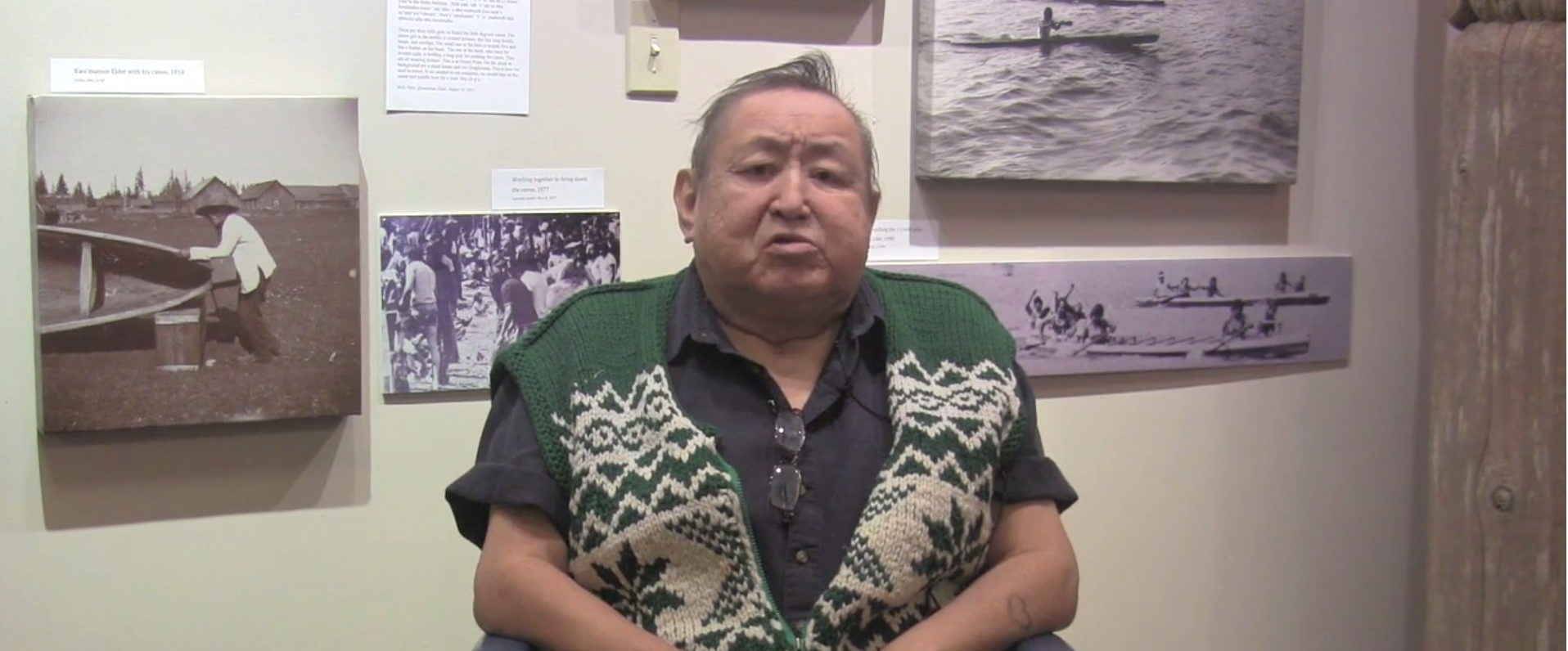
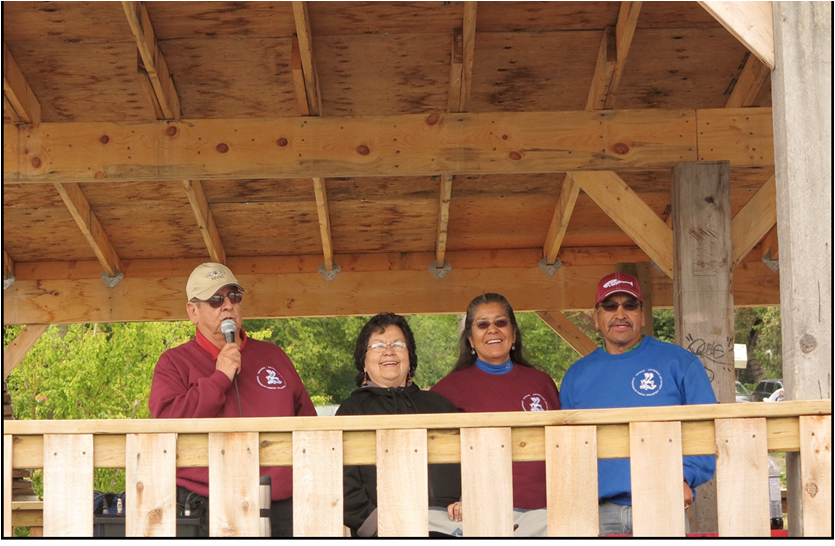
    Willie Seymour gives a short welcome in the Hul’q’umi’num’ language to the youth who are visiting the Cowichan Valley Museum exhibit hwsteli hwulmuhw Coast Salish canoe pullers. Duncan, British Columbia. June 24, 2015


    ’aa sii’em’ nu ts’lhmustimuhw, sii’em’ nu smun’eem,
    Oh, my respected fellow-people, respected young people,

    hay tseep q’u kwus ’i m’i tetsululup ’u tun’a kweyul, hwu’inamut.
    thank you all for coming today, for managing to get here.

    ts’elhum’ut tseep tse’ tthu sxwi’em’s tthu t’at mustimuhw.
    You are going to hear the stories of the Elders of the past.

    tthu sht’esulh kws ’i’shul’s ’u tthu sunihwulh,
    how our people used to paddle on the canoe.

    nilhulh snuhwulhs tthu t’at mustimuhw.
    That was the vehicle in the olden days.

    ’uwu te’ shelhs.
    There were no roads.

    tun’a kweyul ’i’ nilh tthu snuhwulh ha’kwushut, s-hwunitum’a’lh.
    Today, we use the white man’s vehicle.


    Hul’q’umi’num’ Language and Culture Collective

    2015

  • hwsteli hwulmuhw – Cowichan Valley Museum Exhibit: Opening

    hwsteli hwulmuhw – Cowichan Valley Museum Exhibit: Opening

    Click/tap on the audio file below to play:


    ’aa sii’em’ nu siiye’yu, hay tseep q’u kwun’s ’ilup m’i ’ewu ’u tun’a kweyul.
    My dear friends, thank you for coming today.

    ’uy’ shqwaluwuns tthu Quw’utsun’ kwus lumnuhwus tthu siiye’yus.
    The Cowichan people are happy to see their relatives.

    nan tst kwu’elh ’uw’ tsii’uta’lu kwun’s ’ilup m’i tetsul ’u tun’a kweyul.
    I am ever so grateful that you came today.

    ’iyus tse’ ’ul’ tthu stl’ul’iqulh ’u tun’a kweyul kws pe’ptitul’s.
    The young people will have a nice time today challenging each other.

    tth’ihwum’ tseep ’i’ hwiilasmuthut tseep.
    Please take care of one another.

    hay tseep q’u, sii’em’ nu siiye’yu.
    Thank you, my respected friends and relatives.
    — Ruby Peter Stit’um’at

  • hwsteli hwulmuhw – Cowichan Valley Museum Exhibit: Coast Salish Canoe Pullers welcome

    hwsteli hwulmuhw – Cowichan Valley Museum Exhibit: Coast Salish Canoe Pullers welcome

    The following is a welcome message to those visiting the “tthu hwsteli hwulmuhw | Coast Salish Canoe Pullers” installation at the Cowichan Valley Museum in Duncan, BC. View this page to find out more about the exhibit.

    yath ’uw’ q’apthut tthu hwstey kws ’i’shul’s t’ut’a’thut.

    Canoe paddlers always train together.

    Welcome on board our canoe! Our project is designed for people who would like to improve their Hul’q’umi’num’ language skills while learning about the language as it goes along with canoe culture. Whether you are a coach, a canoe puller, a fan, or even a complete stranger to our Coast Salish territory, we hope you will find something here that will interest and inform you. Please enter with respect and appreciation for the knowledge of our Elders that is shared here. We look forward to taking this journey with you!

    We are island nations, salt water people. Our villages from the beginning of time have been strategically located along the seashore, allowing us to enjoy the gifts of the Salish Sea. Our intimate relationship with the water could not have been realized without the help of the sacred canoe.


    nanulh ’uw’ tl’i’st-hwus tthuw’ t’at mustimuhw tthu snuhwulh.

    Canoes were very important to people of times past.


    We Coast Salish People have always gathered to celebrate our culture. In the winter, we gather in our longhouses, and in the summer, we gather at the canoe races. Training for these races is an authentic learning experience that emphasizes respect, humility, and interdependence. Throughout the summer months, the canoe connects our communities from the youngest to the oldest and anchors us in our language and culture.


    mukw’ ’untsu ni’ shhwunum’s kwthu ’i’watul’ hws’ush’ushul teyuwulh.

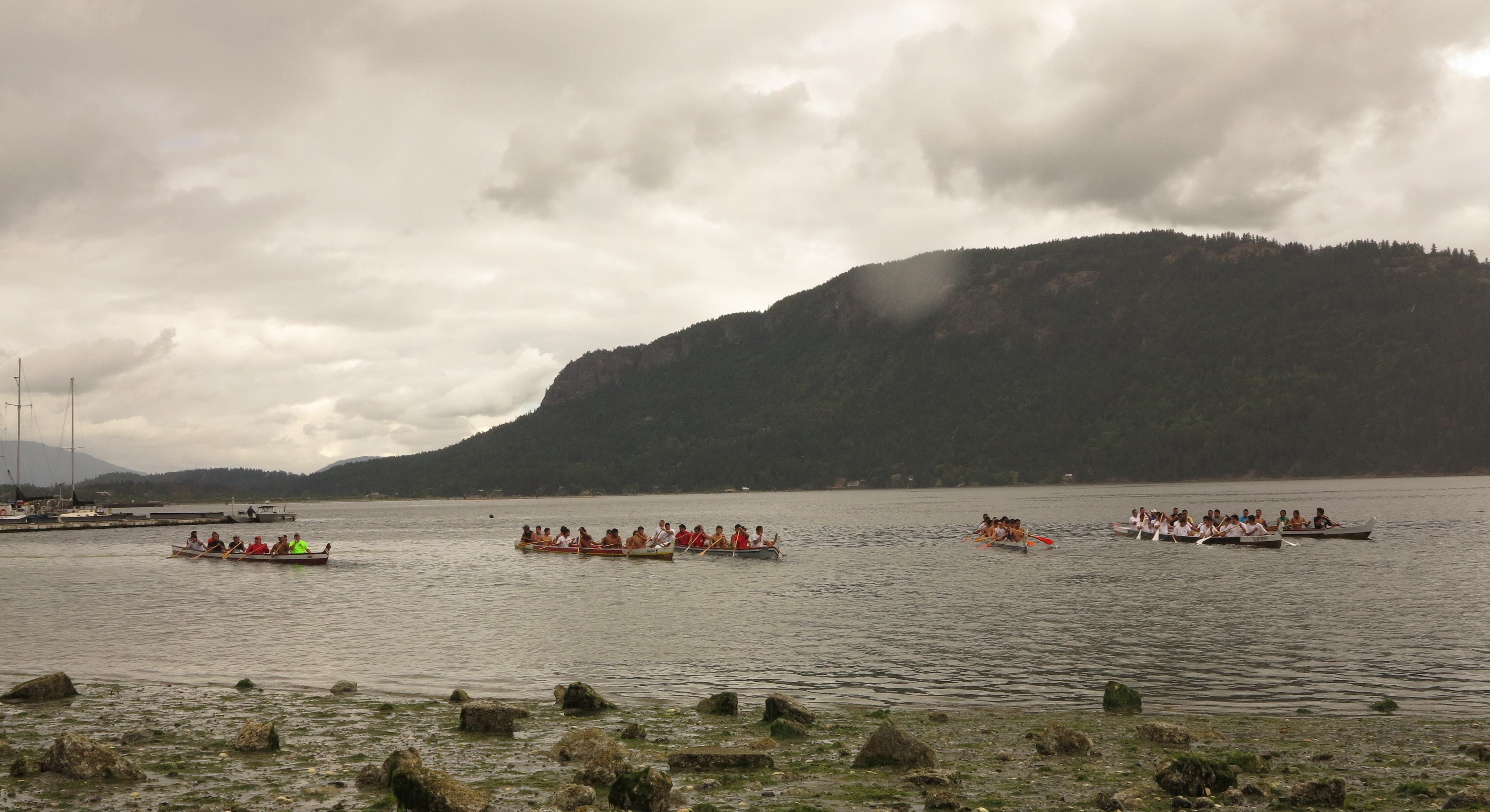
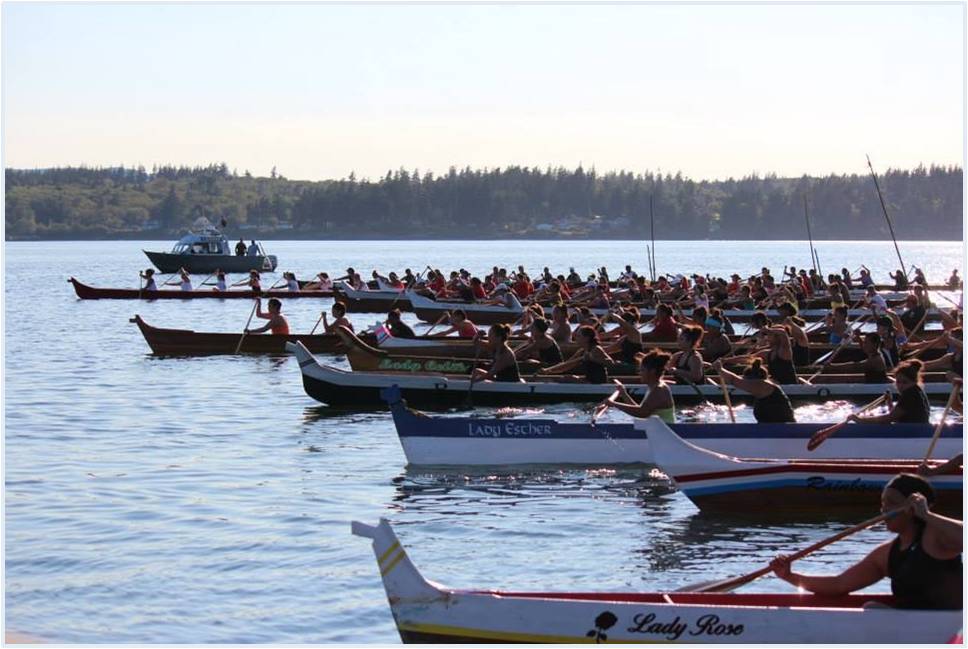
    The paddlers travel each week to different locations for the canoe races.

    The Hul’q’umi’num’ language is very different from English, and so it might be challenging to get going in it, especially at first. But, just as it is with canoe pulling, practicing every day builds a strong mind. Learning our language requires motivation, endurance, perseverance, and much effort. But once you have mastered the basics, then the language starts to unfold and a door opens to the world of the Coast Salish way of being.


    tthu hay ’ul’ ’eli’ hws’ush’ushul ’i’ nilh hay ’ul’ ’eli’

    kw’am’kw’um’ shqwaluwuns.

    Good paddlers always have good, strong thoughts.

    This canoe was put in the water by our dedicated team of language speakers, teachers, and researchers, young and old.

    hay tseep q’u.

  • hwsteli hwulmuhw – Cowichan Valley Museum Exhibit: snuw’uyulh

    hwsteli hwulmuhw – Cowichan Valley Museum Exhibit: snuw’uyulh


    mukw’ kwthu ni’ hwstey mustimuhw ’i’ skw’ey kws hwq’uywulhs kwsuw’ hwun’a’s ’ul’ ni’ q’a’thut ’i’ thut-stum, “timut ch kwu’elh tthun’ shqwaluwun. timut tthun’ smustimuhw. kw’am’kw’um’stuhw tthun’ sqwaluwun.”


    All the ones that become canoe pullers can’t complain when they first join the team and they are told that they have to become strong-minded and physically strong.


    ’amustum ’u kwthu snuw’uyulh xwte’ ’u tthu snuhwulh, xwte’ ’u kwthu sq’umul’s kwthu ni’ sht’es. yuthustum, tthu snuhwulh ’i’ xpey’ lhwulup ni’ ’a’ulh, lhwulup tse’ hulit tthu snuhwulh, hwayt. nilh kwthun’ swe’ ’un’ shqwaluwun ’uw’ niihw kw’am’kw’am’stuhw ’i’ ni’ tse’ hwukw’am’kw’um’ kwthun’ snuhwulh. qux ni’ s’amustewut ’u kwthu ni’ hw’iw’tssun’uq.


    They are given the teachings about different kinds of canoes and paddles. They are told about the teachings of the cedar tree. The leader would say that those of you that that are on the canoe are the ones that are bringing the canoe to life, waking it up. It is your decision to make your canoe become strong. Many teachings are given to the young people.

    — Ruby Peter Sti’tum’at

  • hwsteli hwulmuhw – Cowichan Valley Museum Exhibit: Calling all

    hwsteli hwulmuhw – Cowichan Valley Museum Exhibit: Calling all

    tutul’een’ut tthu mustimuhw        

    Informing the People

    Calling all

    Click/tap on the audio files below to play:
     

    wulh saay’ tthu ’uwatul. The race is going to start.
    ’i tst ’a’ut tthu munchies. We are calling the munchies.
    sma’muluqw mixed
    suw’wuyqe’ men
    slhunlheni’ /kloochman ladies
    hwun’un’uts’a’ singles
    hwyusyey’sul’u doubles
    yut’uxum’ sixes
    ’apun ’i’ kw’ nuts’a’ teyuwulh elevens


    Lining Up

    ya’thut nem’ ’u tthu tsq’ix smukw. Back up to the black ball.
    t’un’uthut tseep. Line up side by side.
    ’uy’ sul’iq’. Good line.
    ’un’nehw tseep! Hold it steady!
    ’almutst tseep kwthu ha’kwt! Wait for the horn!
    na’ut yusthuthi’. Looks good.
    na’ut wulh huye’. There they go!
    ’uy’ ni’ shhwaye’s! Way to get going!
    ’unuhwstuhw tthu s’uwatul’. Stop the race.
    qul’et tseep nem’ t’un’uthut. You all go line up again.


    Commands from your Skipper

    thuythut ee’! thuythut ee’! Fix up! Fix up!
    ’ushul ee’! ’ushul ee’! Paddle!
    luq’uthut ee’! luq’uthut ee’! Even up! Even up!
    timuthut ee’! timuthut ee’! Try harder!


    Calling the race

    hwun’a’ shq’uw’ilum first turn
    shyuse’lus shq’uw’ilum second turn
    yulhi’a’a’qwt shq’uw’ilum last turn
    tus ’u tthu hwun’a’ shq’uw’ilum. They are approaching the first turn.
    yustutes ’u tthu yuw’en’. Looks like it is close for first.
    hwun’a’qsun first place
    syuse’luss second place
    yulhilhuhw third place
    ’uy’ ’un’ hayulup! Way to go, people!


  • hwsteli hwulmuhw – Cowichan Valley Museum Exhibit: Closing

    hwsteli hwulmuhw – Cowichan Valley Museum Exhibit: Closing

    Click/tap on the audio below to play:

    ’a-a-a sii’em’ nu siiye’yu, tthu lhwulup ni’ ’aamust tthu qe’is teti’ ’u tthu snuw’uyulh, ni’ tseep ’aamust ’u kwthu hay ’ul’ xe’xe’ shqwaluwun, hw’iiw’tsust ’u kwthu ni’ sht’es kwthu teti’. hay tseep q’u.

    Aah, my friends and relatives, those of you that are teaching the new canoe pullers the cultural traditions, you are giving them the most sacred feelings, teaching how to be in canoe pulling. Thank you.

    — Ruby Peter Stit’um’at

  • A Replica Dug-out Canoe

    A Replica Dug-out Canoe

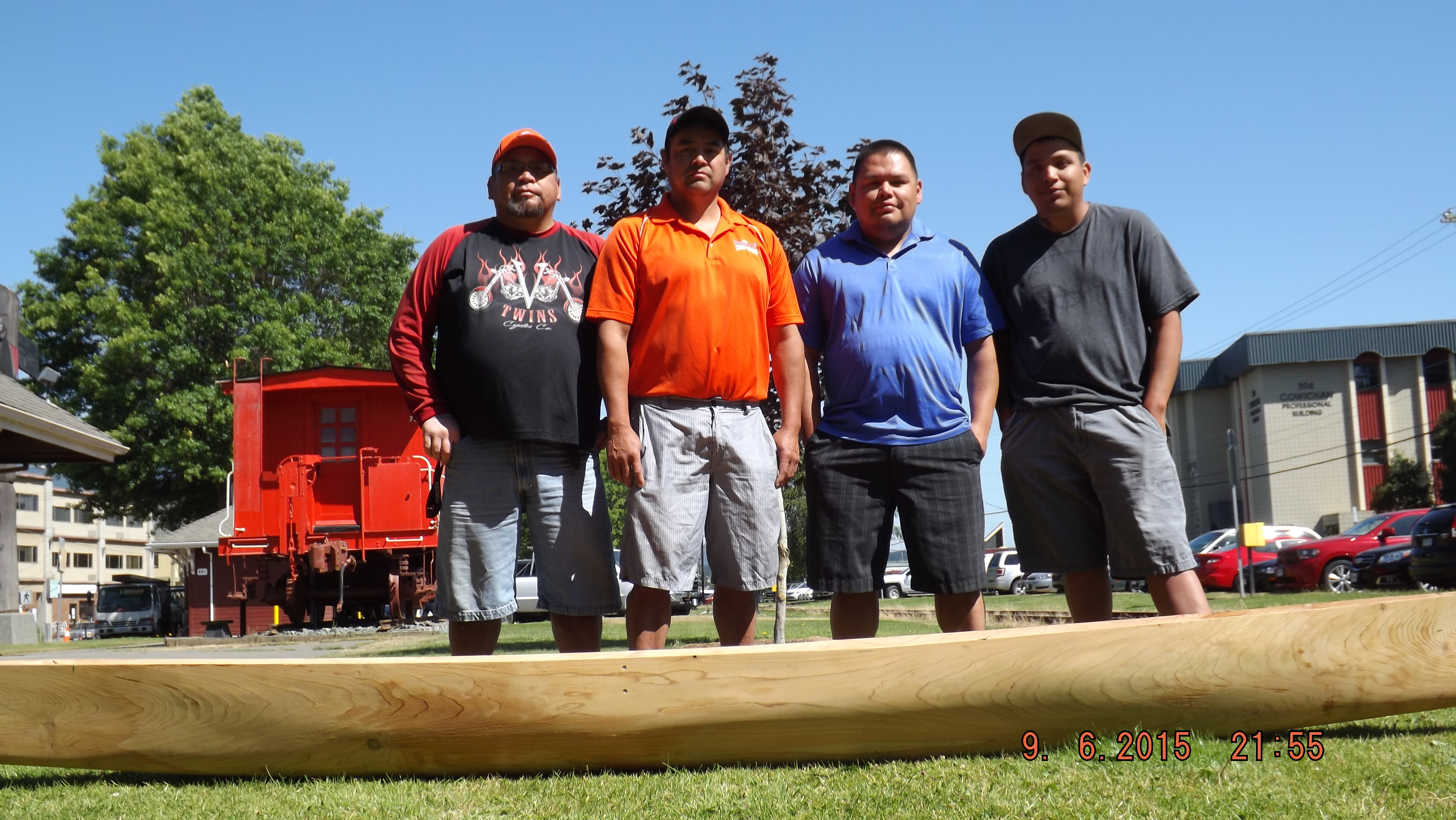
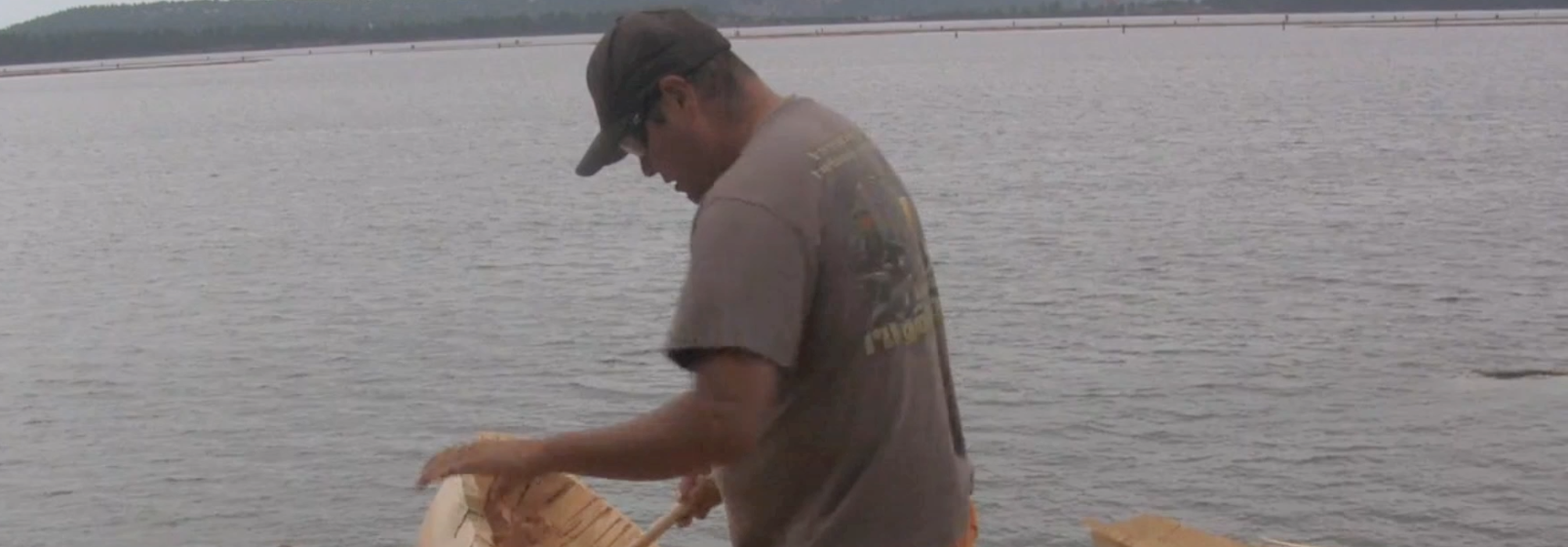
    Snuneymuxw First Nation canoe builder Paul Wyse-Seward (C’uqw’nustun) introduces his project of making a small dug-out canoe. He discusses snuw’uyulh taught to him by his grandfather Bill Seward (C’uqw’nustun). The canoe will be on exhibit at the Cowichan Valley Museum, Duncan, British Columbia, from June 10 to November 14, 2015, as part of an exhibit Tthu Hwsteli Hwulmuhw ‘Coast Salish Canoe Pullers’.


  • tthu hwsteli hwulmuhw |Coast Salish Canoe Pullers

    Cowichan Valley Museum & Archives

    Duncan Train Station
    Hours (June–September) 10-4; Admission by Donation

    Contact: (250) 746-6612 cvmuseum.archives@shaw.ca

    http://www.cowichanvalleymuseum.bc.ca/

    In collaboration with Hul’q’umi’num’ Language and Culture Collective, the Cowichan Valley Museum & Archives presents a new summer exhibit:

    tthu hwsteli hwulmuhw | Coast Salish Canoe Pullers

    Featuring words, sound, and videos in Hul’q’umi’num’ from the Elders and language teachers, the exhibit explores the importance of canoes to the language and culture. It is being held to coincide with the 125th anniversary of the Cowichan canoe races. This exhibits, which aims to raise awareness about the Hul’q’umi’num’ language, opens June 10, 2015 and will be on view until November 14, 2015.


    IMG_3461 copy

    Opening prayer at the Cowichan Bay canoe races, June 2014. Photo: Kevin Baetscher

    Funding for the exhibit provided by the Jacobs Research Fund, Simon Fraser University, and Social Sciences and Humanities Research Council.